
Pennsylvania Measles Outbreak: What the CDC Response Means for Families
- Health
 Lisa Martin
- 11 minutes read

Pennsylvania Measles Outbreak: What the CDC Response Means for Families
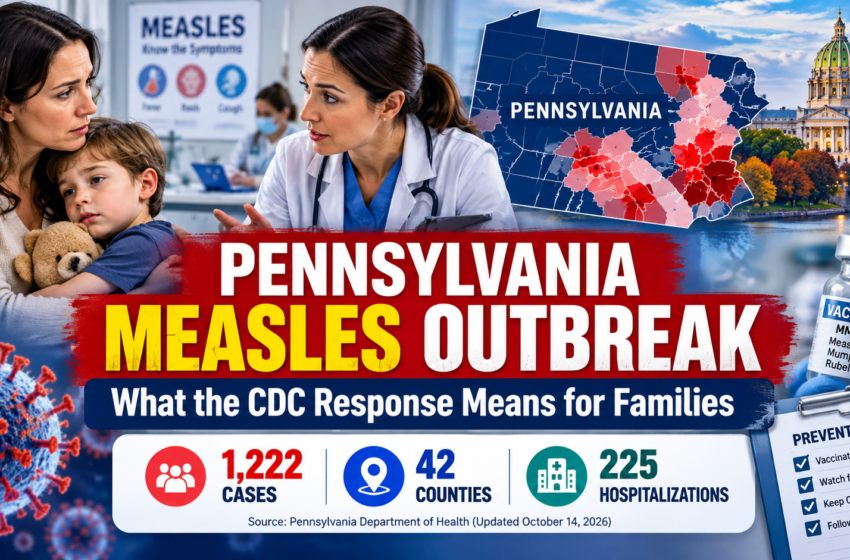
Pennsylvania’s measles outbreak has become a major public-health story for families across the state. As of October 14, 2026, the Pennsylvania Department of Health reported 1,222 confirmed measles cases across 42 counties, 225 hospitalizations and five confirmed measles-associated deaths. The department is also investigating another reported death in Franklin County.
The latest development is the federal response. On October 13, the U.S. Centers for Disease Control and Prevention said it would provide additional support to Pennsylvania after the state formally requested help through the CDC’s Epi-Aid emergency response program. For families, that does not mean a new statewide shutdown or automatic quarantine order. Instead, it means more epidemiological support to investigate transmission, improve outbreak control and help public-health officials identify where the virus is spreading.
Why the Pennsylvania Measles Outbreak Matters Right Now
Measles is one of the most contagious infectious diseases. The CDC says that people who are not protected can be at high risk after exposure, and up to 9 in 10 susceptible close contacts may become infected.
Pennsylvania’s outbreak has also expanded geographically. The state reported cases in 42 counties by October 14, while the CDC’s national reporting system showed a lower Pennsylvania total in its October 9 data because federal case reporting and state updates do not always arrive at the same time.
| Pennsylvania Measles Snapshot | Latest reported figure | What it means |
|---|---|---|
| Confirmed cases | 1,222 | Confirmed by Pennsylvania as of Oct. 14, 2026 |
| Counties affected | 42 | Shows the geographic reach of the outbreak |
| Hospitalizations | 225 | Demonstrates that some infections have required hospital care |
| Confirmed measles-associated deaths | 5 | Pennsylvania’s count as of Oct. 14; another death was under investigation |
| Cases among vaccinated people | 4, less than 1% | The vast majority of reported cases were not among vaccinated individuals |
Source: Pennsylvania Department of Health, statewide update published October 14, 2026. Counts can change as investigations and reporting continue.
What the CDC Response Actually Means for Families
The CDC’s Epi-Aid program is designed for urgent public-health problems. It brings epidemiological specialists into an outbreak investigation so state and local officials can make faster, evidence-based decisions about controlling transmission.
In practical terms, families can expect the federal support to strengthen areas such as case investigation, exposure tracking, outbreak analysis, laboratory and surveillance coordination, and public-health guidance. The CDC has said it will work with Pennsylvania officials to investigate the outbreak, strengthen response efforts and prevent further spread.
That support is important because Pennsylvania remains the state authority leading the day-to-day public-health response. The CDC’s own measles guidance explains that state and local health departments generally lead outbreak investigations, while the federal agency provides data analysis, laboratory support, guidance and rapid assistance when requested.
Does the CDC Response Mean Families Should Be Worried About a Lockdown?
No. An Epi-Aid is an outbreak-investigation and technical-support mechanism, not a declaration of a statewide lockdown.
Families should instead pay attention to local exposure notices, vaccination status, school or child-care communications and guidance from their healthcare provider and local health department. Public-health actions can vary depending on where transmission is occurring and whether a person has evidence of immunity.
What Parents Should Know About Measles Symptoms
Measles usually begins with fever, cough, a runny nose and red or watery eyes. A rash typically appears after the early symptoms and spreads from the head downward. Symptoms often appear 7 to 14 days after exposure, although the incubation period can be longer.
One reason outbreaks are difficult to contain is that a person with measles can spread the virus from four days before through four days after the rash appears. The virus can also remain infectious in an indoor airspace for up to two hours after an infected person leaves.
If you or your child develops symptoms that could be measles, the CDC advises calling a doctor or hospital first rather than simply walking into a healthcare facility. That allows staff to make arrangements that reduce exposure to other patients and workers.
Is the MMR Vaccine Still the Main Protection?
Yes. The Pennsylvania Department of Health says two doses of MMR or MMRV provide the best protection against measles and notes that the vaccine is about 97% effective after two doses.
Pennsylvania also says MMR vaccination is widely available through pediatric and primary-care offices, Federally Qualified Health Centers, rural health centers, pharmacies, county or municipal health departments and the state’s health centers. Children who are uninsured or underinsured may have access to vaccination through Pennsylvania’s public programs.
- Check your child’s and your own MMR vaccination records.
- Ask a healthcare provider whether anyone in the household needs a catch-up dose.
- Watch for fever, cough, runny nose, red eyes and rash after a possible exposure.
- Call ahead before visiting a medical office if measles is suspected.
- Follow local health-department instructions after a known exposure.
What If Someone Has Been Exposed to Measles?
Do not wait for symptoms before asking for guidance. The CDC says people who have been exposed should contact their healthcare provider immediately because some people without evidence of immunity may qualify for post-exposure measures.
Depending on the circumstances, MMR vaccine may be useful when given within 72 hours of exposure, while immune globulin may be considered within six days for certain people. The appropriate option depends on age, health status, vaccination history and the timing of exposure, so families should get individualized advice from a healthcare professional or public-health department.
Why the Difference Between State and CDC Death Counts Matters
The Pennsylvania outbreak has also produced a dispute over how measles-associated deaths are classified and counted. Pennsylvania reported five confirmed measles-associated deaths as of October 14 and was investigating another death. Federal reporting has shown a different national total because the CDC and state authorities use different reporting systems and definitions and may update at different times.
For readers, the key point is that these differences should not be interpreted as evidence that one side is simply ignoring the outbreak. Death classification can require medical records, laboratory evidence and an assessment of whether measles contributed to the death. The numbers can change as reviews are completed.
What Happens Next in Pennsylvania?
The immediate focus will be on using the additional CDC support to understand transmission patterns and help Pennsylvania contain the outbreak. The state is also continuing vaccination outreach and maintaining its measles dashboard so residents and healthcare providers can follow developments.
For families, the most useful response is practical rather than panic-driven: know your vaccination status, take exposure notices seriously, recognize the early symptoms and contact healthcare professionals promptly if measles is suspected.
Bottom Line
The Pennsylvania measles outbreak is now large enough to require additional federal epidemiological support, but the CDC response does not by itself signal a statewide shutdown. The bigger message for families is that public-health agencies are escalating outbreak investigation and containment efforts while vaccination remains the strongest protection against measles.
Updated: October 16, 2026. Outbreak figures may change as Pennsylvania and federal health agencies update their reporting.